The Elusive Diagnosis: Navigating Modern Healthcare's Maze
Diseases and Conditions
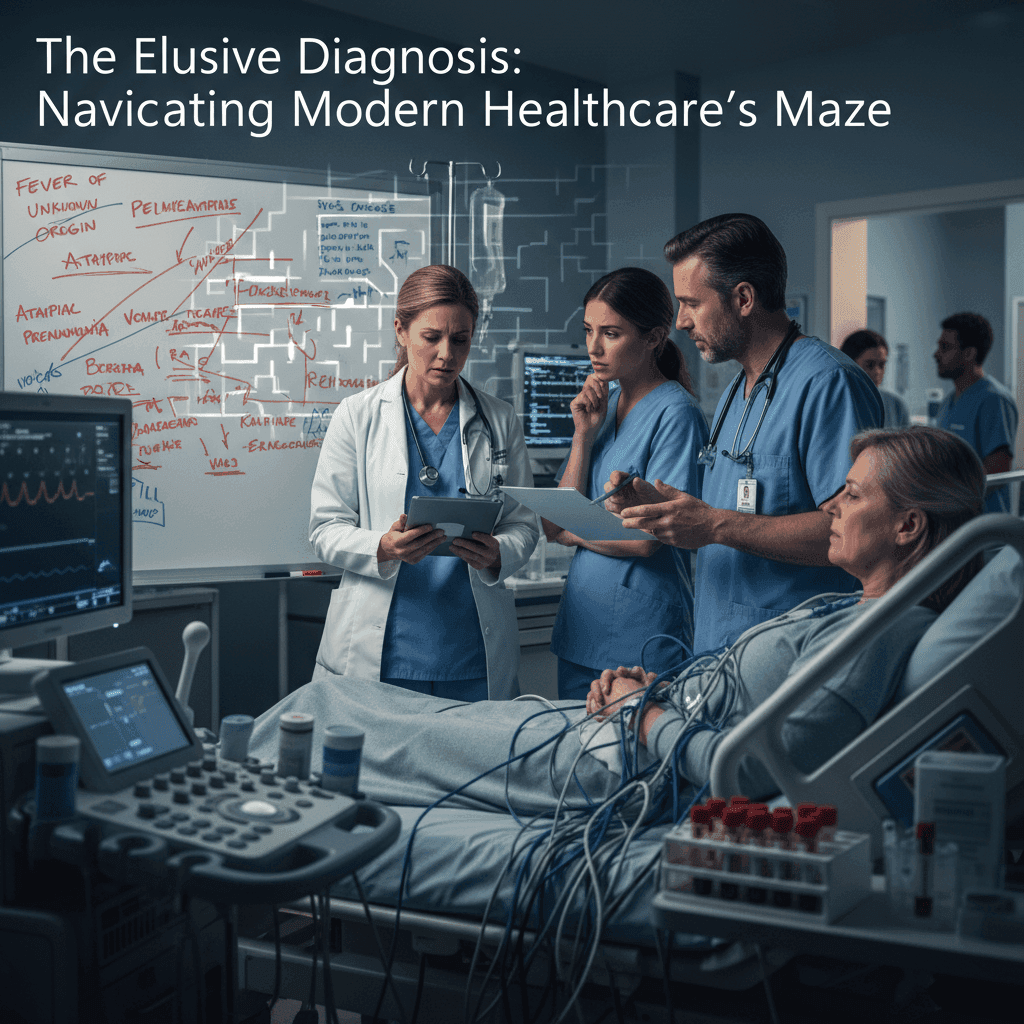
Navigating the intricate landscape of modern medicine often presents physicians with a profound challenge: the diagnostic dilemma. This post delves deep into the multifaceted complexities that healthcare professionals face daily when striving to accurately identify a patient's condition amidst a sea of confounding symptoms, evolving disease presentations, and the sheer volume of medical knowledge. We explore scenarios where a clear diagnosis remains elusive, forcing clinicians to grapple with uncertainty, weighing probabilities, and considering a spectrum of possibilities that range from the common to the exceedingly rare. The journey from initial symptom presentation to a definitive diagnosis is rarely linear. It's often fraught with twists and turns, requiring not only extensive medical expertise but also keen observational skills, empathetic patient communication, and sometimes, a healthy dose of intuition. We examine the critical impact of delayed or misdiagnosis on patient outcomes, highlighting the emotional and physical toll it can exact. Furthermore, this discussion sheds light on the ethical considerations that arise when diagnostic clarity is absent, including the pressures from patients, families, and healthcare systems to arrive at a conclusive answer, even when the data remains ambiguous. Beyond the human element, we scrutinize the role of technological advancements – from sophisticated imaging techniques to artificial intelligence and genomics – in both aiding and, at times, complicating the diagnostic process. Are these tools truly silver bullets, or do they introduce new layers of interpretation and potential pitfalls? The post also touches upon the vital importance of interdisciplinary collaboration and continuous medical education in sharpening diagnostic acumen. We invite you to explore the nuanced world where science meets art, where certainty often gives way to informed clinical judgment, and where the pursuit of an accurate diagnosis remains one of medicine's most profound and persistent challenges. Discover how clinicians navigate these uncharted waters, striving always for the best possible care.
The Diagnostic Labyrinth: Confronting Ambiguity in Modern Care
The landscape of modern medicine, for all its dazzling advancements and burgeoning knowledge, paradoxically often plunges clinicians into a profound diagnostic labyrinth, where certainty frequently gives way to an unsettling ambiguity. Physicians are increasingly tasked with navigating a bewildering array of patient presentations, where classic symptom constellations are rare, diseases manifest atypically, and the sheer volume of available information, while theoretically empowering, can also obscure rather than illuminate the path to a definitive diagnosis. This intricate journey is rarely a straightforward application of algorithms; instead, it demands an exquisite blend of scientific rigor, a deep well of clinical experience, nuanced observational skills, and often, a touch of well-honed intuition to decipher the subtle clues hidden within a patient’s narrative and physical signs. Confronting this inherent ambiguity means meticulously weighing probabilities, considering a vast spectrum of possibilities ranging from the commonplace to the exceedingly rare, and accepting that a clear-cut answer may not immediately materialize, even with the aid of sophisticated imaging, genomic sequencing, or artificial intelligence; indeed, these very tools can introduce new complexities in interpretation. The emotional and ethical weight of this uncertainty is immense, as clinicians grapple with the imperative to provide definitive answers while responsibly managing patient and family expectations amidst diagnostic equipoise, underscoring that the art of medicine in this modern era lies not in always finding immediate clarity, but in skillfully and empathetically guiding patients through the diagnostic maze with informed judgment and unwavering dedication to care, even when the path ahead remains shrouded in an unsettling, yet inescapable, fog of the unknown.

Uncertainty & Complexity: Navigating the Diagnostic Dilemma
The diagnostic dilemma stands as a formidable crucible within the labyrinthine corridors of modern medicine, a space where certainty often recedes, giving way to profound uncertainty and multifaceted complexity. Physicians routinely embark on a non-linear odyssey from initial patient presentation to a definitive diagnosis, a journey frequently complicated by an evolving tapestry of confounding symptoms, atypical disease presentations, and the sheer, overwhelming volume of continually expanding medical knowledge. This inherent complexity compels clinicians to meticulously weigh probabilities, consider a broad spectrum of possibilities ranging from the commonplace to the exceedingly rare, and navigate scenarios where a clear diagnostic path remains stubbornly elusive. The ethical imperatives to provide answers, coupled with the emotional and physical toll of potential misdiagnosis or delay, add further layers to this already intricate challenge. Navigating these uncharted waters demands not only extensive medical expertise and sharp observational skills but also a keen sense of intuition and the compassionate art of patient communication, all while grappling with the constant pressure to make critical decisions in the absence of absolute clarity. It's a testament to the blend of science and human judgment that underpins the pursuit of optimal patient care amidst such pervasive ambiguity.

Jennifer Trimbee

Aug 19, 2025

0 reading now
What Causes Cysts and When to Worry
Cysts are fluid-filled sacs that can develop in various parts of the body, including the skin, ovaries, and internal organs. They are usually benign, meaning they are not cancerous, and are often caused by blockages in ducts, cell proliferation, or infections. Hormonal changes, genetic factors, and chronic inflammatory conditions can also contribute to cyst formation. While most cysts are harmless and may resolve on their own, some can become problematic if they grow large, cause pain, or become infected. It's important to monitor cysts and seek medical advice if they change in size, color, or sensation, or if they occur in conjunction with other symptoms.
Read more
Jennifer Trimbee
Aug 19, 2025

Disclaimer
This site offers information designed for educational purposes only. You should not rely on any information on this site as a substitute for professional medical advice, diagnosis, treatment, or as a substitute for, professional counseling care, advice, diagnosis, or treatment. If you have any concerns or questions about your health, you should always consult with a physician or other healthcare professional.